2010-05-06
Monju restart after 14 years fuels worry
| The reactivation of the Monju prototype fast-breeder reactor in Fukui Prefecture, expected to take place in early May more than 14 years after its shutdown due to a sodium coolant leak and fire in 1995, will most likely get off to a rocky start. The lapse of 14 years has provoked safety worries among analysts who point to a lack of operating experience among Monju's technicians. The prototype fast-breeder reactor is designed to produce more mixed plutonium-uranium oxide fuel than it consumes. |
| Apr 27 | Japan to launch 'space yacht' propelled by giant solar sail (BusinessWeek) |
|  The Japan Aerospace Exploration Agency plans to launch the world's first satellite powered by a giant solar sail to demonstrate next-generation renewable-energy technology, the agency said today. The 20-meter sail, which cost about 1.5 billion yen ($16 million), will be wrapped around the "space yacht" during lift-off and will unfurl once the craft leaves the Earth's atmosphere, JAXA said. The 'Ikaros' will be launched from Tanegashima Space Center in southwestern Japan on May 18, it said. |
| Apr 27 | Scientists discover deep ocean current near Antarctica (The Hindu) |
|  Japanese and Australian researchers have found that a deep-sea current moves millions of cubic metres of water northward from Antarctica every second. The scientists came to the conclusion after two years of measurements. The scientists moored more than 30 current and temperature recorders across its probable path for two years. After retrieving the instruments they discovered the current, which flows at depths below 3,000 metres, at times hit speeds greater than 700 metres per hour, carrying volumes as high as 30 million cubic metres per second. No other deep current in the Southern Hemisphere moves that quickly. |
| Apr 27 | Alien crayfish found in Tonegawa river system (Yomiuri) |
| 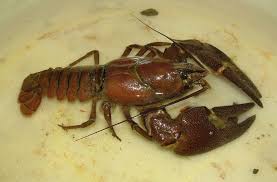 The signal crayfish, classified as an invasive species harmful to local ecosystems, has recently been found in the Tonegawa river water system in Chiba Prefecture. Environment Ministry officials have said it is the first time the signal crayfish has been confirmed in the Kanto region. Signal crayfish are indigenous to North America and measure about 10 centimeters to 15 centimeters. They are known to be voracious eaters of native snails, small fish, fish eggs and plants, and cause further damage to the environment by making burrows and eroding river banks. |
| Apr 24 | Japanese seaweed found in Fiordland (TVNZ) |
|  A type of seaweed which belongs in Japan has shown up in New Zealand's Fiordland. MAF says the Undaria kelp is listed as an unwanted organism under the Biosecurity Act. It is a fast-growing seaweed which can spread rapidly, displacing native species. It was accidentally introduced to New Zealand waters in the mid-1980s, and has established itself in east coast ports and harbours. Now a lone adult plant has been found at Sunday Cove in Breaksea Sound. |
| Apr 24 | Protected Japanese crested ibis throws away one of its own eggs (Mainichi) |
|  A Japanese crested ibis has flung one of its own eggs from its nest, the Environment Ministry said. The ibis is a 1-year-old female in the Niigata Prefecture city of Sado that mated with a 3-year-old male ibis. The two were released into the wild in 2009 and 2008, respectively, according to the ministry. |

 бичлэг


